
My family and I aren’t like most Minnesotans. Although my son insists on not wearing a coat even in single-digit weather, we don’t participate in snowshoeing, skiing, ice fishing, or any of the other activities people do here in the winter. We did try to go to the Minnesota Ice Festival to check out the ice maze (certified as being the world’s largest). But that lasted about two minutes, since my son got grumpy about how slow people were.
So, if we’re not playing a game of Uno, we sometimes huddle around our kotatsu table. We watch a movie through Netflix or Prime Video — the stupider, the better. Our last adventure was The Croods: A New Age. The film had about five redeeming minutes. The first half was a psychedelic road trip (see Exhibit A below). The second half devolved into monkey fights, wolf spiders (which are literally what they sound like in an animated film) and slaps as language.
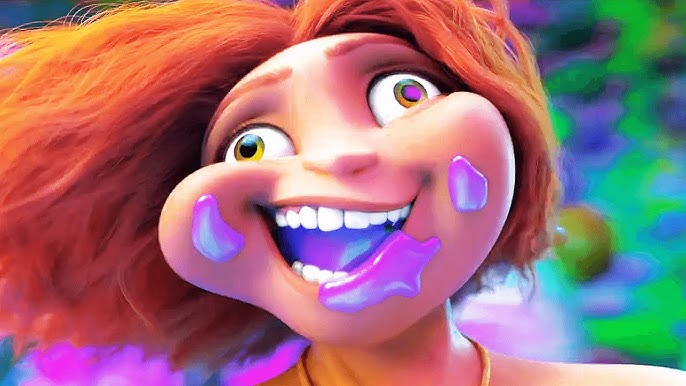
Universal Pictures
But the bad plot and colors that burned our eyes wasn’t what almost made my son retreat into his room. His complaint was about the bad voice acting.
I had to admit he had a point. And his cringing made me consider the cast.
The very celebrity cast.
If you’re famous, you get a role, apparently
The Croods 2 follows a plague-like trend of famous people doing film roles. Some celebrities are equipped to do a great job in a movie studio. They do credit to the characters they voice. But it’s long since stopped feeling like production companies are casting based on qualifications. Instead, they cast based on immediate popularity, with the celebrities often being a poor fit for their character, not having a voice that’s appropriately distinct for animation, or just voicing their character with their regular voice.
But the trend of celebrities overtaking roles isn’t just limited to film. It’s also notable in publishing. People like Tom Hanks, Keanu Reeves, Tyra Banks, the Jenners, and Pamela Anderson all have produced books. You can also see the influence in art, with individuals like Sylvester Stallone enjoying exhibits.
It’s about money, not quality
As a writer and musician, I’ll be the first to argue that people can excel in more than one artistic field. Hugh Jackman thrived as Wolverine, for example. Yet, he more than holds his own singing the role of Jean Valjean in Les Miserables. I find the style of much of Jim Carrey’s art to be wonderfully appealing, too. I don’t agree with everything in his more political images. But I absolutely appreciate his willingness to let a bold, unashamed, authentic voice speak from the end of his brush.
But I get the feeling that production, publishing, and other arts companies are ignoring the fact that talent in one area doesn’t automatically and always translate to talent in another. The reviews for many celebrity books are…well, not good. Taylor Swift, who voiced Audrey in The Lorax, noted how different voice acting was from singing:
With a name comes opportunity, but meritocracy dies
Because people repeatedly are given new, unrelated opportunities simply because their names have clout, I’m left wondering if we’ve lost whatever meritocracy might have been left in the world. Their influence overshadows those who could do an equally good or even better job, and who — unlike the celebrities — are often are desperately trying to make financial ends meet. The debate about celebrity encroachment within children’s book publishing is especially heated. That’s not only because of the negative impact on “regular” authors. It’s also because celebrity-penned kids books so often can feel like — or even be deliberately intended as — marketing to impressionable people.
I wonder, too, if perhaps the celebrities fully understand that the offers they get are not necessarily a nod to their potential. Let’s just be real and blunt about it. Companies stick their heads in the sand about the fact not everyone is a crossover talent because of profit incentives. Creating the highest quality art product no longer matters. Just getting tickets sold or butts in seats to earn the green stuff does.
That other talented artists have to struggle even more to find paid work is enough of a problem. But the fact that the push to make offers to celebrities prioritizes money over the quality of the art is even worse. It confuses the public about human potential, feeding them potato chips in place of healthy, hearty soup.
But if profit incentive lead companies to make offers to celebrities, as the use of AI becomes more and more dominant, I wonder how long even celebrities will be given their golden tickets. Why offer those tickets to real people when technology can simply stand in at a fraction of the cost? Prominent Hollywood figures already are having to battle digital dopplegangers, and I don’t foresee the situation getting better without significant additional regulation.
As an artist, I want every talented individual to have the chance of discovery in every area they excel in. If a pop artist wants to do voice acting, do an exhibit, or otherwise be creative, good on them. But I will not in good conscience support the bypass of normal protocols and industry expectations.
Celebrities ought to be subject to the same procedures as any Joe or Jane off the street. They shouldn’t get a free pass just because people already know who they are.
Procedures are the only guardrails we have to ensure that the best talent wins. By protecting those procedures and insisting they not be discarded, we preserve fair competition. But we also preserve the exceptionality within art that can move and heal us.